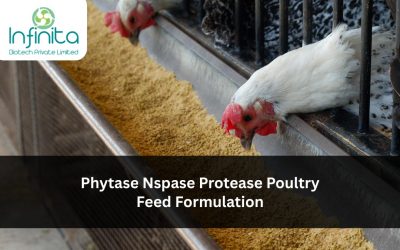
Key Highlights Phosphorus bioavailability increase of 25–40%: Phytase degrades phytate, releasing bound phosphorus and enabling inorganic phosphate reduction in the diet. AME improvement of 60–120 kcal/kg: NSP-ase reduces intestinal viscosity in cereal-based diets,...
Uncategorized
Pectinase & Cellulase in Cold-Press Juice Extraction: Clarity, Yield & NFC Standards
Key Highlights Yield improvement of 10–25%: Combined pectinase-cellulase treatment delivers significantly higher juice yields than mechanical pressing alone. Clarity above 95% transmittance: Enzymatic depectinisation is essential for achieving NFC clear juice clarity...
Papain, Bromelain & Subtilisin in Enzymatic Exfoliation: Substrate Specificity, pH Stability & Cosmetic Formulation
Key Highlights Three distinct enzyme classes: Papain and bromelain are plant-derived cysteine proteases; subtilisin is a microbially produced serine protease with different substrate specificity and pH profile. Selective action on dead skin: All three enzymes cleave...
Microbial Enzyme Consortia for Industrial Effluent Treatment: COD/BOD Reduction in Food & Textile Wastewater
Key Highlights COD reduction of 50–70%: Enzyme consortia in aerobic biological treatment can bring food wastewater within CPCB discharge standards within 24–48 hours. Multi-enzyme activity: Effective consortia express protease, lipase, amylase, cellulase, and...
Enzymatic Bioscouring vs Conventional NaOH Scouring: BOD Load, Water Savings & Tensile Strength Data
Key Highlights BOD reduction of 30–50%: Bioscouring effluent has near-neutral pH and dramatically lower organic load than NaOH scouring waste. Tensile strength preserved: Enzymatic bioscouring results in less than 3% tensile strength loss versus 5–15% for NaOH...
Alpha Amylase vs Xylanase in Bread Dough Mechanism, Dosage & Industrial Outcomes
Key Highlights Different substrates, complementary action: Alpha-amylase cleaves starch; xylanase hydrolyses arabinoxylans — their mechanisms do not compete. Dosage precision matters: Fungal alpha-amylase is dosed at 10–50 ppm; xylanase at 20–100 ppm of flour weight...
Is Cement Still the Best Choice for Soil Stabilization, or Are Enzyme Stabilizers the Smarter Investment?
Stable ground is the backbone of every successful infrastructure project. From highways to rural roads, industrial yards to parking lots choosing the right soil stabilization method determines durability, lifecycle cost, and environmental impact. Traditionally, cement...
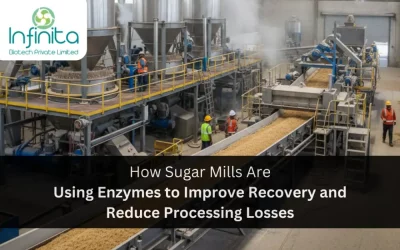
How Sugar Mills Are Using Enzymes to Improve Recovery and Reduce Processing Losses
Introduction: Why Sugar Recovery Is Under Pressure Sugar mills operate in an environment where margins are constantly tightening. Cane quality fluctuates, harvesting delays increase microbial activity, and energy costs continue to rise. In this setting, improving...
Why Enzymes Are Becoming Important Functional Ingredients in Modern Skincare Formulations
Introduction: A Shift Toward Smarter Skincare Skincare is moving away from aggressive formulations that promise instant results at the cost of long-term skin health. Today’s consumers expect products to be effective, gentle, and compatible with the skin’s natural...
How Enzymes Improve Cosmetic Products for Skin and Hai
Introduction to Enzymes in Cosmetics Enzymes are naturally occurring biocatalysts that enhance the performance of skincare and haircare products. Unlike traditional chemical agents, they interact precisely with biological substrates, offering targeted benefits such as...
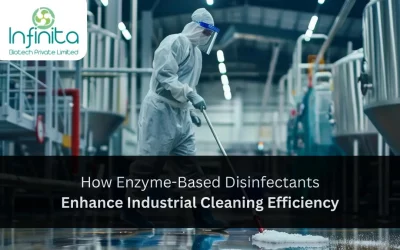
How Enzyme-Based Disinfectants Enhance Industrial Cleaning Efficiency
Introduction to Disinfectant Enzymes Enzyme-based disinfectants have transformed industrial cleaning by tackling organic residues and microbial contamination at a molecular level. Unlike conventional chemical cleaners, these solutions offer precise action, improving...
How Enzymes Improve Detergent Efficiency and Fabric Care
Introduction to Detergent Enzymes Laundry has changed significantly over the years, and enzymes have played a major role in that transformation. Instead of relying solely on harsh chemicals to remove stains, modern detergents use enzyme-based solutions to tackle dirt...
How Enzymes Are Revolutionizing Industrial Waste Management
The Rising Challenge of Industrial Waste Industrial operations across sectors like food processing, textiles, detergents, pharmaceuticals, and biofuels generate substantial amounts of waste. Proper management of this waste is critical—not only to comply with...
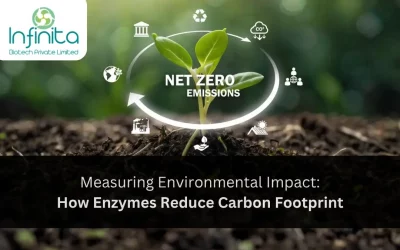
Measuring Environmental Impact: How Enzymes Reduce Carbon Footprint
The Growing Need for Sustainable Industrial Practices Industrial operations are under increasing pressure to reduce their environmental impact while maintaining efficiency and profitability. Energy-intensive processes, excessive chemical usage, and waste generation...
How to Choose the Right Enzyme for Your Industrial Process
Understanding the Importance of Enzyme Selection Industrial processes across sectors such as food and beverage, textiles, detergents, biofuels, and pharmaceuticals increasingly rely on enzymatic solutions for efficiency, sustainability, and product quality. However,...
How a Textile Mill Reduced Chemical Use by 40% Using Enzymes
A Turning Point for the Textile Industry The global textile industry is one of the largest consumers of water and chemicals. From desizing and scouring to bleaching and finishing, every stage traditionally relies on chemical-intensive processes that drive up...
Cost-Benefit Analysis: Enzymatic Processes vs Traditional Chemicals
The Shift Toward Sustainable Industrial Solutions Industrial operations worldwide are under increasing pressure to improve efficiency while meeting environmental and regulatory standards.Traditional chemical processes, long regarded as the backbone of industrial...
Sustainable Brewing: How Enzymes Enhance Beer Production
The beer industry has always been at the forefront of innovation, combining tradition with modern science to produce beverages that delight consumers. Today, sustainability has become a major focus, with breweries seeking ways to reduce environmental impact while...
Why Partnering with Infinita Biotech Ensures Quality and Innovation in Enzymes
In today’s competitive industrial landscape, quality and innovation are critical when choosing a partner for enzyme solutions. Infinita Biotech has established itself as a trusted leader in enzyme technology, providing businesses with high-performance, reliable, and...
How Enzymes are Transforming Natural Skincare and Cosmetics
Introduction The beauty industry is undergoing a transformation driven by consumer demand for clean, sustainable, and science-backed products. This shift is replacing harsh synthetic chemicals with gentle, naturally derived alternatives. Among the most innovative...
Enzymes in Drug Delivery Systems: Enhancing Targeting and Absorption
Introduction The landscape of modern therapeutics is rapidly shifting from broad-spectrum treatments to precise, patient-specific interventions. Among the innovations enabling this transformation, pharmaceutical enzymes have emerged as key facilitators of targeted and...
Enzymes for Soil Health: Improving Crop Yield with Natural Biocatalysts
Introduction The foundation of every successful harvest lies beneath our feet—healthy, living soil. Yet, decades of intensive farming have depleted soils, stripped organic matter, and disrupted the delicate balance of microbial life. To restore productivity while...
Enzymes in Pulp and Paper Industry: Boosting Yield and Reducing Chemical Use
Introduction The pulp and paper industry, one of the largest water and energy consumers globally, has long relied on aggressive chemical treatments to produce the white, smooth sheets that power everything from printing to packaging. Yet, the pressure to shift toward...
Enzymes for Wastewater Treatment: A Sustainable Approach to Pollutant Removal
Introduction The escalating burden of water pollution, driven by industrialisation, urban sprawl, and chemical-intensive manufacturing, has strained conventional effluent treatment systems beyond capacity. Industrial discharge often contains organic load, grease,...
Enzymatic Degumming in Textile Industry: Cleaner and Greener Fabric Processing
Introduction Fabric processing has long been a chemically intensive affair. But in an age that demands sustainability, the textile industry is undergoing a much-needed metamorphosis. Among the most promising developments is the adoption of textile enzymes, which offer...
Detergent Enzymes: The Key to Eco-Friendly and Powerful Cleaning Solutions
In today’s sustainability-driven world, consumers demand cleaning products that are both effective and environmentally responsible. Traditional chemical-based detergents, though powerful, often leave behind residues, pollute water systems, and require high-temperature...
The Role of Malt Extract in Brewing: Enhancing Flavor and Fermentation Efficiency
Brewing is a fine balance of science and creativity. Behind every distinctive beer lies a combination of ingredients that define its taste, aroma, and consistency. Among these, malt extract stands out as a key driver of flavor development and fermentation performance....
Distillery Enzymes: How They Improve Fermentation and Alcohol Yield
Introduction The production of alcohol, whether for beverages or biofuels, relies on efficient fermentation to maximize yield and maintain quality. Distilleries around the world are increasingly turning to enzymatic solutions to enhance the conversion of raw materials...
The Role of Dextranase Enzyme in Sugar Refining: Benefits and Applications
Introduction Sugar refining is a meticulous process that requires precision, efficiency, and purity to achieve high-quality sucrose production. However, one of the major challenges in sugar processing is the formation of dextran, a complex polysaccharide that...
Pharmaceutical Enzymes: Driving Innovation in Drug Development and Therapeutic Solutions
Introduction to Pharmaceutical Enzymes The field of pharmaceuticals is undergoing a significant transformation, with enzymes at the forefront of many groundbreaking innovations. Pharmaceutical enzymes are reshaping drug development and treatment options, offering...
Top 5 Benefits of Bakery Enzymes in Modern Baking
Introduction Baking has undergone significant advancements, especially with the use of bakery enzymes. These natural proteins have improved product consistency, shelf life, and dough quality, making them indispensable in modern baking. Whether you're a small-scale...
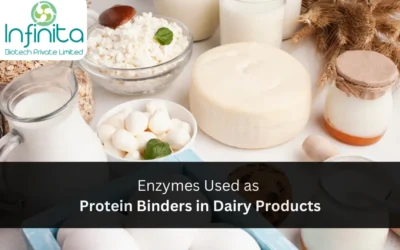
Enzymes Used as Protein Binders in Dairy Products
In the dairy industry, enzymes play a crucial role in the production of various products. One of the applications of enzymes is their use as protein binders in dairy products. Enzymes are natural proteins that act as catalysts, speeding up chemical reactions within a...
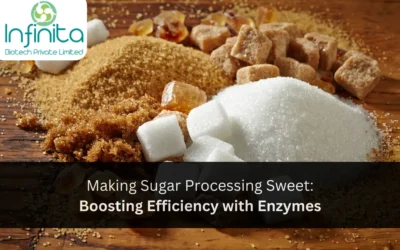
Making Sugar Processing Sweet: Boosting Efficiency with Enzymes
In the world of sugar processing, efficiency is key. The ability to produce high yields of sugar while minimizing energy consumption and costs can make a significant difference in the success and profitability of a processing plant. One way to achieve this efficiency...
Why College Paper Writing Service is Necessary?
Introduction College students often face tight deadlines, complex assignments, and academic pressure, making it challenging to keep up with their coursework. A college paper writing service provides professional assistance, helping students manage their workload,...