 Summarize this Article with AI
Introduction to Disinfectant Enzymes
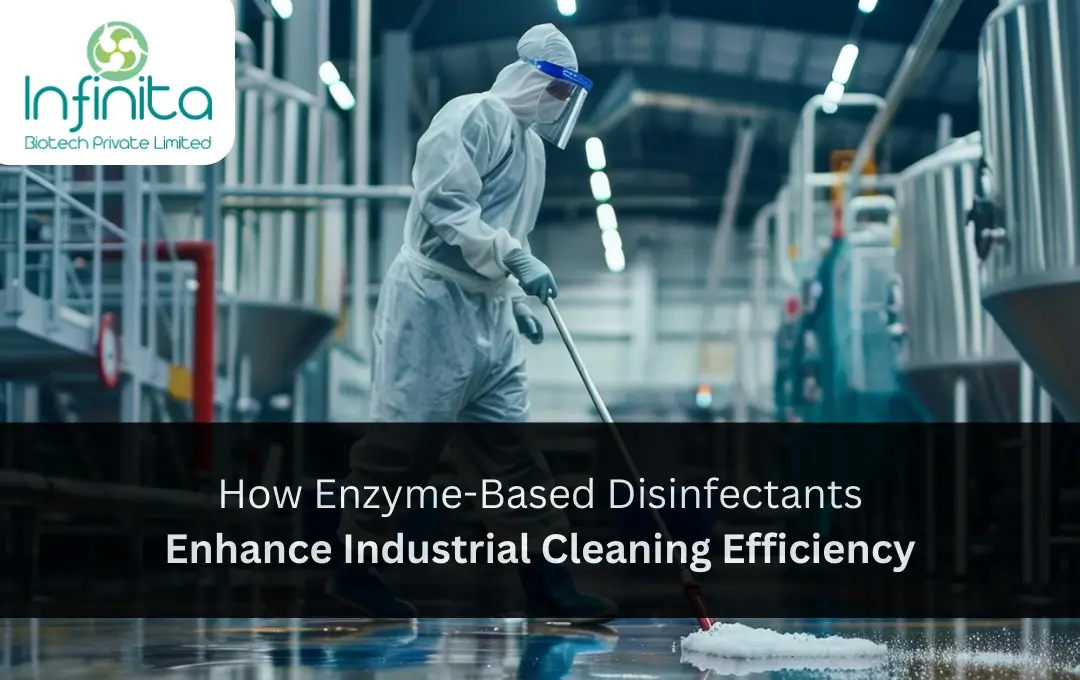
Enzyme-based disinfectants have transformed industrial cleaning by tackling organic residues and microbial contamination at a molecular level. Unlike conventional chemical cleaners, these solutions offer precise action, improving hygiene while reducing reliance on harsh chemicals. Over time, they have moved from niche applications to become an integral part of food processing, pharmaceutical, and manufacturing sanitation practices.
How Enzymes Work in Industrial Cleaning
Enzymes act as natural catalysts, breaking down proteins, fats, and carbohydrates into smaller, soluble components that are easier to remove. Their specificity ensures that stubborn residues are efficiently eliminated without damaging equipment or surfaces. Modern formulations also allow enzymes to perform under a wide range of temperatures and pH conditions, making them versatile for diverse industrial environments.
Types of Enzymes and Their Role
Different enzymes perform unique functions in cleaning. Proteases remove protein-rich residues, while lipases tackle oily and greasy deposits. Amylases help dissolve carbohydrate-based soils, and cellulases help maintain the surface quality of natural fibers and certain processing materials. Other enzymes enhance the breakdown of complex organic matter, ensuring thorough cleaning across food processing, pharmaceutical, textile, and healthcare settings.
Benefits for Industrial Cleaning and Safety
Using enzyme-based disinfectants improves cleaning efficiency while minimizing the need for strong chemical agents. Surfaces and equipment are better preserved, and the risk of chemical-related damage is reduced. Enzyme solutions also contribute to safer workplaces by lowering exposure to irritants, and their energy-efficient operation supports both economic and environmental goals.
Environmental and Operational Advantages
Enzymes are biodegradable and leave minimal chemical residues, reducing the environmental footprint of industrial cleaning. Their ability to work in cooler conditions and shorter wash cycles lowers energy consumption and water usage. This combination of effectiveness and sustainability makes enzyme-based disinfectants a smart choice for industries striving to meet environmental standards while maintaining high hygiene levels.
Advances in Formulation and Application
Modern disinfectant enzymes are formulated to remain stable during storage and throughout the cleaning process. They are available in liquids, powders, or encapsulated forms and can be applied via sprays, soaks, or automated systems. Protective stabilizers and cold-active formulations ensure consistent performance even under challenging industrial conditions, making cleaning processes more reliable and sustainable.
By adopting these innovative enzyme-based solutions, Infinita Biotech is enabling industries to achieve cleaner surfaces, safer environments, and greener operations.