 Summarize this Article with AI
- BOD reduction of 30–50%: Bioscouring effluent has near-neutral pH and dramatically lower organic load than NaOH scouring waste.
- Tensile strength preserved: Enzymatic bioscouring results in less than 3% tensile strength loss versus 5–15% for NaOH scouring.
- Water savings of 25–40%: Elimination of caustic rinse cycles substantially reduces water consumption per processing cycle.
- Energy reduction of 30–45%: Processing at 50–60°C versus 95–100°C for alkaline scouring reduces thermal energy costs significantly.
- One-bath compatibility: Bioscouring can be combined with desizing in a single bath, cutting water, time, and energy simultaneously.
- Infinita Biotech supplies: Industrial textile enzymes for bioscouring, desizing, and complete pre-treatment processes.
- What Is Scouring and Why Does It Matter?
- Conventional NaOH Scouring: Process and Limitations
- Enzymatic Bioscouring: Mechanism and Enzymes Used
- BOD Load and Effluent Quality Comparison
- Tensile Strength and Fabric Quality Data
- Water and Energy Savings Analysis
- Process Parameters and Optimisation
- One-Bath Desizing and Bioscouring
- Selection Guide: When to Use Bioscouring
- Industries and Sectors
- Related Reading
- Frequently Asked Questions
Scouring is the wet pre-treatment process that removes natural non-cellulosic impurities from cotton and other natural fibres — including waxes, pectin, proteins, and mineral salts — to achieve the fibre wettability and absorbency required for dyeing, bleaching, and finishing. Conventional scouring uses sodium hydroxide (NaOH) at high temperature and concentration. It works, but it creates significant problems: high effluent BOD, elevated TDS, fibre damage, and substantial water and energy consumption.
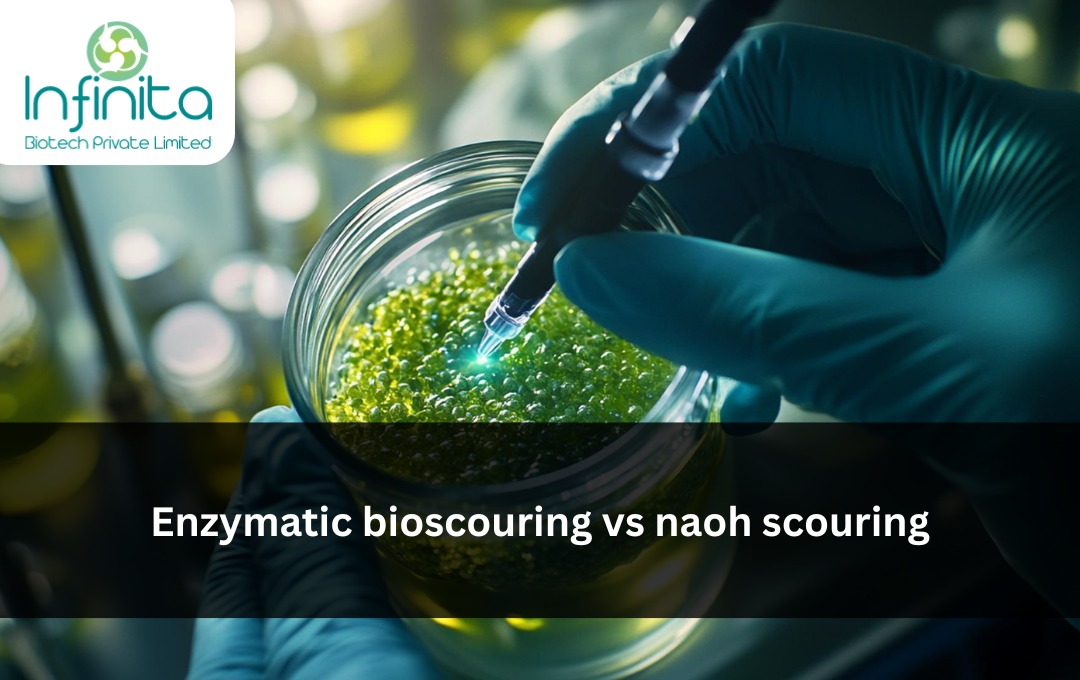
Enzymatic bioscouring is the technically viable and commercially proven alternative. Using alkaline pectinase as the primary active enzyme, bioscouring selectively removes the pectin that holds impurities to the fibre surface without attacking the cellulose polymer itself. The result is comparable or superior fabric quality with dramatically improved environmental metrics. Infinita Biotech manufactures and supplies a comprehensive range of textile enzymes including bioscouring formulations for cotton wet processing.
1. What Is Scouring and Why Does It Matter?
Raw cotton fibre contains approximately 80–90% cellulose but also 5–10% wax (cottonseed oil-derived fatty acids and esters), 1–2% pectin, 1–2% protein, 1% ash (mineral salts), and miscellaneous hemicellulose. These impurities collectively give raw cotton its characteristic hydrophobic behaviour — water beads off grey fabric because the waxy, pectin-cemented cuticle blocks fibre wetting. Scouring removes these impurities to convert grey fabric into a white, fully wettable substrate ready for further processing.
The quality of scouring determines the downstream success of dyeing uniformity, bleaching efficiency, and finishing adhesion. Poorly scoured fabric produces uneven dye uptake, reduced colour depth, and adhesion failures in functional finishes. The role of enzymes in textile industry processing has grown substantially as manufacturers recognise these quality and environmental trade-offs.
2. Conventional NaOH Scouring: Process and Limitations
The Conventional Process
Conventional NaOH scouring operates at 3–5% NaOH concentration (by weight of fabric), temperatures of 95–100°C, and processing times of 30–60 minutes. Surfactants, chelating agents, and sodium silicate are typically added to the bath. The alkaline conditions saponify waxes (converting fatty acid esters to water-soluble soaps), hydrolyse pectin, and partially degrade protein. After scouring, the fabric must be hot-washed, neutralised with acid, cold-washed, and then carried forward to bleaching.
Limitations and Environmental Impact
The process generates effluent at pH 11–13 with high BOD (typically 2,000–5,000 mg/L), high Chemical Oxygen Demand (COD), elevated TDS from dissolved solids, and significant quantities of neutralisation chemicals in the rinse water. Textile mills processing high volumes face expensive effluent treatment costs. Additionally, the aggressive alkaline conditions degrade cellulose through peeling reactions, reducing the degree of polymerisation of the fibre and causing measurable tensile strength loss of 5–15% depending on fabric structure and processing intensity.
In India, CPCB (Central Pollution Control Board) effluent discharge standards for textile dyeing and processing units specify BOD limits of 30 mg/L and COD limits of 250 mg/L. Meeting these standards from a NaOH scouring baseline requires substantial effluent treatment investment. Bioscouring significantly reduces the treatment burden from the source.
3. Enzymatic Bioscouring: Mechanism and Enzymes Used
Enzymatic bioscouring targets the pectin that acts as the structural adhesive binding wax and other cuticle impurities to the cotton fibre surface. The primary active enzyme is alkaline pectinase (with polygalacturonase and pectin lyase activities), which hydrolyses the pectin network at the fibre cuticle level. Once pectin is disrupted, the wax and other impurities lose their attachment to the fibre surface and are dispersed into the bath by the surfactant co-formulation, without any alkaline saponification occurring.
Commercial bioscouring preparations typically also contain alkaline protease (to hydrolyse protein impurities), hemicellulase (to assist with hemicellulose removal), and wetting agents. Lipase may be included to aid wax emulsification, though the primary wax removal mechanism in bioscouring is the disruption of the pectin-mediated attachment rather than direct hydrolysis of the wax itself. The complete role of enzymes in textile industry pre-treatment processes includes desizing, bioscouring, and enzymatic bleaching at different stages.
4. BOD Load and Effluent Quality Comparison
| Effluent Parameter | NaOH Scouring | Enzymatic Bioscouring | Reduction |
|---|---|---|---|
| Effluent pH | 11–13 | 7.0–8.5 | Near-neutral |
| BOD (mg/L) | 2,000–5,000 | 800–2,000 | 40–60% reduction |
| COD (mg/L) | 5,000–12,000 | 2,000–5,000 | 40–58% reduction |
| TDS (mg/L) | 3,000–8,000 | 1,000–3,000 | 50–65% reduction |
| Neutralisation chemicals | High (acid wash required) | None required | Eliminated |
| Effluent treatment load | High | Moderate–Low | 30–50% reduction |
The near-neutral pH of bioscouring effluent is the most impactful single parameter for effluent treatment infrastructure. Treating highly alkaline effluent (pH 11–13) requires acid addition, generating salts that add to TDS and create an additional treatment burden. Near-neutral bioscouring effluent can be directed to biological treatment stages directly, reducing chemical consumption and shortening the treatment chain. Wastewater treatment enzymes can further augment the treatment of residual organic load in bioscouring effluent.
5. Tensile Strength and Fabric Quality Data
Tensile Strength Retention
The most commercially significant fabric quality advantage of bioscouring is its superior tensile strength retention. Alkaline peeling reactions in NaOH scouring degrade cellulose from the reducing chain ends, progressively reducing the degree of polymerisation and average molecular weight of the fibre. This translates to measurable tensile strength losses of 5–15%, which compound with any subsequent alkaline bleaching steps. Enzymatic bioscouring, which operates at pH 7.5–9.0 and 50–60°C, does not initiate peeling reactions and consistently preserves 97–99% of original tensile strength.
Representative data (100% cotton woven fabric, 150 g/m2):
NaOH scouring (3% NaOH, 98°C, 45 min): Warp tensile strength loss 9.2%; weft tensile strength loss 7.8%.
Enzymatic bioscouring (pectinase-protease, 55°C, 45 min, pH 8.0): Warp tensile strength loss 1.8%; weft tensile strength loss 1.4%.
This 7–9 percentage point difference in tensile retention has direct downstream implications for seam strength in finished garments and resistance to mechanical stress in industrial textiles.
Fabric Handle and Absorbency
Bioscouring typically achieves wicking height (Tegewa test) values equivalent to NaOH scouring — both exceed the 100 mm standard in 30 minutes — while producing a slightly softer fabric handle due to the absence of alkaline-induced fibre surface roughening. The whiteness improvement from bioscouring alone is generally lower than NaOH scouring, but the combined desizing-bioscouring-bleaching sequence achieves comparable final whiteness values. Textile enzymes for greener fabric processing cover the full pre-treatment enzyme strategy.
Switch to Cleaner Textile Processing
Infinita Biotech supplies proven bioscouring enzyme formulations for cotton and natural fibre pre-treatment. Reduce BOD load, save water, and improve fabric tensile retention with certified textile enzymes.
6. Water and Energy Savings Analysis
Water Savings
NaOH scouring requires multiple hot water rinse cycles to neutralise and remove alkali from the fabric. A standard scouring sequence for continuous processing requires 5–8 washing compartments consuming 15–25 litres of water per kilogram of fabric. Bioscouring operates at lower pH and requires fewer rinse cycles — typically 2–4 washing compartments — reducing water consumption to 8–15 litres per kilogram. The overall water saving of 25–40% per processing cycle represents a significant cost and sustainability benefit for mills operating under water stress or facing volume-based water tariffs.
Energy Savings
The temperature differential between conventional scouring (95–100°C) and bioscouring (50–60°C) represents a 35–50°C reduction in operating temperature. Accounting for the heat capacity of water and fabric in a jigger or jet machine, this translates to thermal energy savings of 30–45% for the scouring step. Combined with reduced wash cycle volumes (fewer hot water rinses), total energy savings from switching to bioscouring can reach 35–50% of the scouring step energy budget.
7. Process Parameters and Optimisation
| Parameter | NaOH Scouring | Enzymatic Bioscouring |
|---|---|---|
| Temperature | 95–100°C | 50–60°C |
| pH | 12–13 | 7.5–9.0 |
| Processing time | 30–60 min | 30–60 min |
| NaOH concentration | 3–5% owf | Not required |
| Enzyme dose (pectinase) | Not applicable | 1–3% owf (preparation) |
| Rinse cycles required | 5–8 cycles | 2–4 cycles |
| Neutralisation step | Required | Not required |
8. One-Bath Desizing and Bioscouring
One of the most commercially significant developments in enzymatic textile pre-treatment is the one-bath simultaneous desizing and bioscouring process. By combining amylase (for starch desizing) with alkaline pectinase and protease (for bioscouring) in a single bath at 55–65°C, mills can complete two sequential processes in a single machine cycle. This integration typically saves 40–50% water consumption compared to sequential two-bath processing, reduces processing time by 30–40%, and cuts energy use by 35–45%.
The pH compatibility of amylase (typically pH 6.5–7.5) and alkaline pectinase (pH 7.5–9.0) requires careful formulation to find the optimal combined pH window, typically pH 7.5–8.0, where both enzyme types retain sufficient activity. This is an area where enzyme manufacturer application expertise is critical — the correct enzyme preparation and process conditions must be validated for the specific fabric and size recipe in question. The broader future of enzyme textile processing is moving rapidly toward these integrated one-bath processes.
9. Selection Guide: When to Use Bioscouring
Bioscouring is the preferred choice when tensile strength retention is critical (technical textiles, medical textiles, sportswear), when effluent compliance is a primary constraint, when energy cost reduction is a priority, and when the mill is transitioning to clean-label or GOTS-certified organic textile processing. NaOH scouring may retain advantages when very high wax loads are present (such as in heavily waxed grey fabrics from specific origins) or when very short processing cycles are required and temperature reduction cannot be accommodated. These are increasingly rare cases as enzyme technology improves.
10. Industries and Sectors
- Cotton woven fabric mills using textile enzymes
- Cotton knit processing units
- Technical textile manufacturers requiring tensile strength retention
- GOTS and organic textile processors
- Sportswear and activewear fabric processors
- Medical textile manufacturers requiring gentle processing
- Denim and indigo dyeing operations
11. Related Reading
Key Takeaways
- Enzymatic bioscouring reduces effluent BOD by 40–60% and operates at near-neutral pH, dramatically reducing effluent treatment complexity.
- Tensile strength retention is 97–99% with bioscouring versus 85–95% with NaOH scouring — a measurable fabric quality advantage.
- Water savings of 25–40% and energy savings of 30–45% are achievable by switching from alkaline to enzymatic scouring.
- One-bath desizing-bioscouring combines two process steps, delivering up to 50% water reduction and 40% time reduction.
- Bioscouring is the technically preferred route for technical textiles, organic certified fabrics, and mills under effluent compliance pressure.
- Commercial enzyme preparations include alkaline pectinase as the primary active plus protease, hemicellulase, and lipase accessories.
12. Frequently Asked Questions
What is enzymatic bioscouring in textile processing?
Enzymatic bioscouring uses enzyme preparations — primarily alkaline pectinase — to remove non-cellulosic impurities from cotton fibres. It replaces the conventional NaOH-based alkaline scouring process with a biodegradable, low-temperature alternative that preserves fibre integrity. Learn more about textile enzyme solutions from Infinita Biotech.
How much does bioscouring reduce BOD load compared to NaOH scouring?
Enzymatic bioscouring reduces BOD of textile effluent by 40–60% compared to conventional NaOH scouring, and effluent pH drops from 11–13 to near-neutral 7.0–8.5, substantially reducing the effluent treatment burden and associated chemical costs.
Does enzymatic bioscouring maintain fabric tensile strength?
Yes. Bioscouring typically results in less than 2% tensile strength reduction compared to 5–15% for NaOH scouring. This makes bioscouring the preferred route for technical textiles, organic certified fabrics, and any application where mechanical fabric properties are critical specifications.
What enzymes are used in bioscouring?
The primary enzyme is alkaline pectinase, which targets the pectin adhesive layer on the cotton cuticle. Commercial preparations also include alkaline protease, hemicellulase, and sometimes lipase. Contact Infinita Biotech for complete bioscouring enzyme formulation details.
How much water does enzymatic bioscouring save versus NaOH scouring?
Water savings typically range from 25–40% per processing cycle, primarily by eliminating the high-temperature caustic wash and multiple neutralisation rinse cycles required after NaOH scouring.
What temperature is needed for enzymatic bioscouring?
Most commercial bioscouring preparations operate optimally at 50–60°C and pH 7.5–9.0. This compares to 95–100°C at pH 12–13 for NaOH scouring — a temperature reduction of 35–50°C that generates significant energy savings.
Is enzymatic bioscouring suitable for all cotton fabric types?
Bioscouring is well-suited to cotton woven fabrics, knits, and cotton blends. Very heavily sized fabrics may require desizing pretreatment. Bioscouring has also been successfully applied to linen and hemp. Wool and silk use different enzyme profiles due to different fibre chemistry.
Can bioscouring be combined with desizing in a one-bath process?
Yes. One-bath combined desizing and bioscouring using amylase and alkaline pectinase-protease reduces water consumption by 40–50%, processing time by 30–40%, and energy by 35–45% compared to sequential two-bath processing. This is increasingly the preferred commercial approach for modern textile pre-treatment operations.